HomeProductsDPSS Lasers

DPSS Lasers

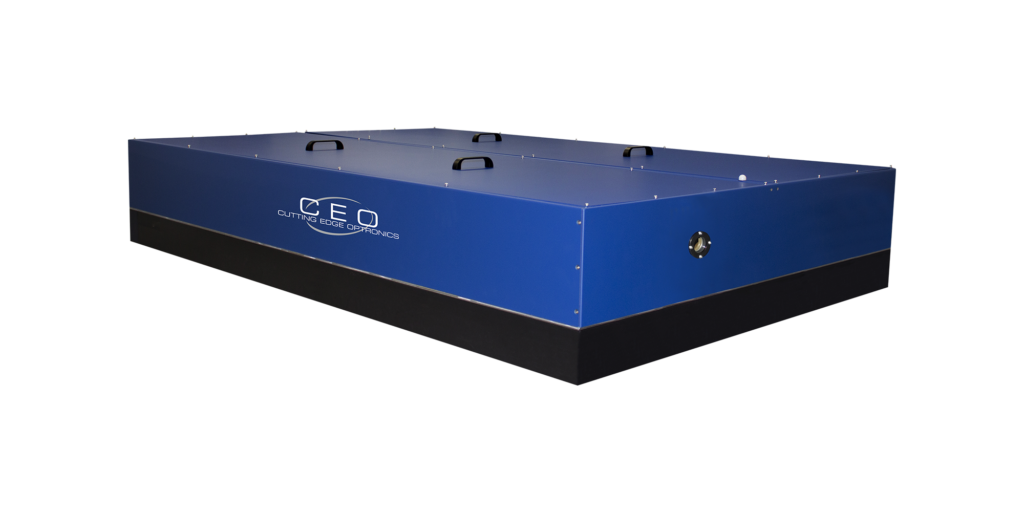
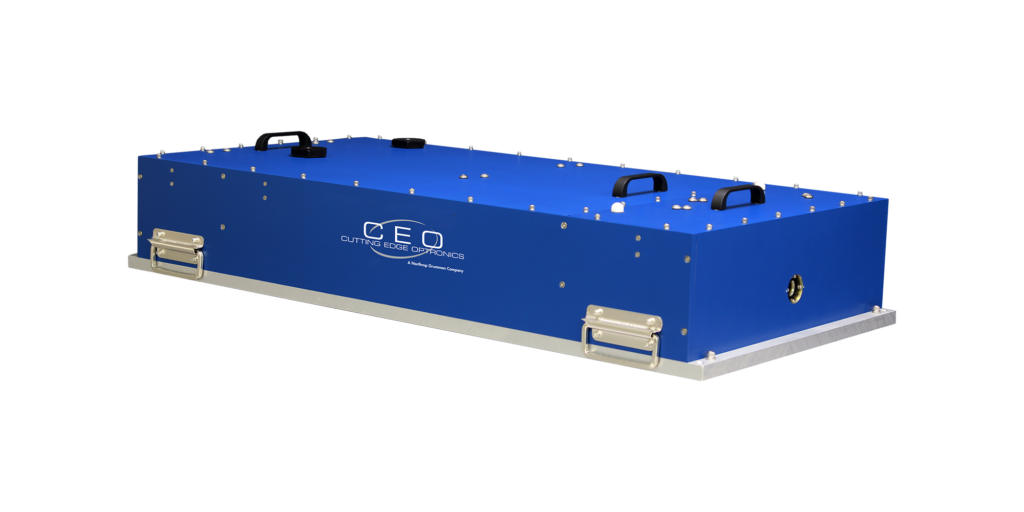
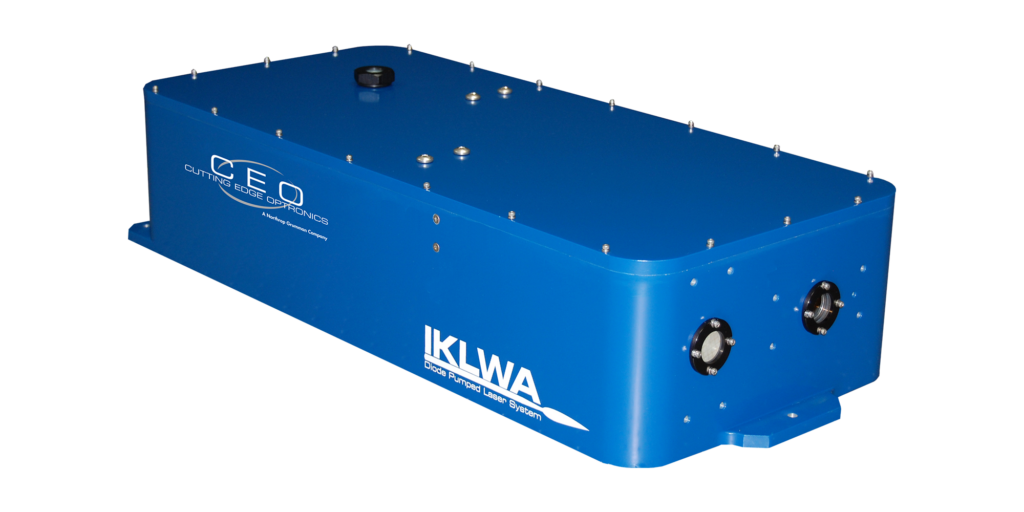
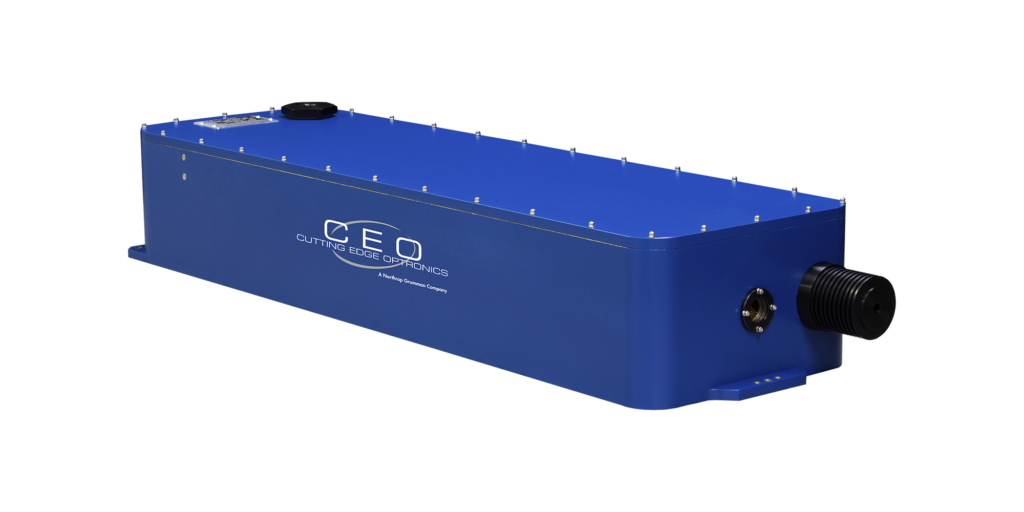
Cutting Edge Optronics manufactures DPSS laser systems for a wide range of performance specifications. We control the entire process by internally manufacturing critical components such as laser diodes, gain modules and laser drive electronics.

CEO lasers have been installed into a variety applications including, but not limited to:

Browse our diverse list of product offerings.

Please accept statistics, marketing cookies to watch this video.

CUTTING EDGE RELIABILITY AND PERFORMANCE

CEO’s diode-pumped solid-state high energy laser systems enable extremely stable, reliable and longlived performance over the lifetime of the application.

At the heart of every DPSS laser system are the pump laser diodes. Significant improvements in high-power laser diode technology and manufacturing processes have increased their peak power, lifetime, and reliability to the point where DPSS lasers use fewer, higher power bars that produce stable pumping over 10s of billions of shots (>10^9) before noticeable degradation that might require a slight change in operating parameters. Even with this very low, slow degradation, DPSS laser system performance remains stable over days, weeks, months, and even years of operation, depending on utilization.

Our Most Popular Product Offerings

HIGH ENERGY LASER DESIGN CAPABILITIES

CEO uses several design approaches for how the ‘first photon’ is generated in the front end of the laser, based on the end user’s application and requirements:

  • High-energy oscillators (in the 10s of mJs),
  • Pre-amplifiers, and/or
  • Regenerative amplifiers

The above are employed where appropriate for efficient amplification resulting in specific pulse widths, beam profiles, and pulse energies. The subsequent amplifier stages are similar in all of CEO’s high-energy laser systems.

Contact the sales team for the full list of capabilities and specifications

Fill out the form below and we will get back to you shortly

Country(Required)
By submitting this form, you agree to receive informational newsletters from CEO Laser.

Frequently Asked Questions

What wavelengths, pulse energies, and repetition rates are standard for DPSS lasers? arrow faq

Diode-pumped solid-state (DPSS) lasers cover a wide envelope. Commercial micromachining DPSS systems run at 1064 nm and its harmonics (532 nm green, 355 nm UV, 266 nm deep UV) with pulse energies from microjoules to millijoules at repetition rates of 50 kHz to 300 kHz. High-energy DPSS systems for OPCPA pumping, Ti:Sapphire pumping, and laser peening run at the same wavelengths but invert the trade, delivering joules per pulse at single-shot to kHz repetition rates. Nd:YAG (1064 nm) and Nd:YLF (1053 or 1047 nm) are the dominant gain media.

CEO DPSS lasers operate at 1064 nm (Nd:YAG) and 1053/1047 nm (Nd:YLF) at the fundamental, with harmonic conversion to 532 (527), 355 (351), and 266 (263) nm. Pulse energies range from millijoule class in seed oscillators to 10 J in MOPA (master-oscillator power-amplifier) systems such as the GS-10000-QMI, which delivers >10 J at 1053 nm. Similarly, the CPL-070-QSF produces7 J at 527 nm. Repetition rates span single-shot to 10 kHz; the Patara-HP PA-050-QMGF-PIV produces >200 W per oscillator at 532 nm at 10 kHz in its Nd:YAG configuration.

How does DPSS compare to lamp-pumped lasers in efficiency and beam quality (M²)? arrow faq

Diode-pumped solid-state (DPSS) lasers convert electrical input to laser output at wall-plug efficiencies above 10%, compared to 1% to 3% for flashlamp-pumped systems, because diode emission spectrally matches the Nd absorption bands rather than dumping broadband light into the rod. Beam quality is also higher. Low-energy commercial DPSS lasers reach M² close to 1 (near diffraction-limited); high-energy MOPA configurations specify M² < 2 because of thermal lensing in large-aperture rods. DPSS systems also run cooler, package smaller, and outlast flashlamp systems by orders of magnitude in shot count.

CEO Gigashot configurations deliver M² < 2 with greater than 90% far-field Gaussian fit at 320 mJ, and long-term output stability under 2% RMS (measured at 0.45% RMS over 10 hours on a 7J 527 nm laser). Pump diode arrays exceed 10 billion (>10⁹) shots of usable life, compared to a few hundred million shot replacement cycle typical of flashlamps. Warm-up runs under 30 minutes and mean time to realignment (MTTR) is on the order of months to years.

What cooling requirements and environmental tolerances do high-energy DPSS lasers have? arrow faq

High-energy diode-pumped solid-state (DPSS) lasers require active cooling sized to the average power of the laser, with suitable engineering margin included. Water cooling through a closed-loop chiller is standard for kilowatt-class average power; conduction cooling and thermo-electric coolers (TECs) handle lower power and OEM modules.. Pump diode lifetimes are strongly correlated to operating temperature, so proper system design for the expected operating conditions is critical. Stable ambient environments of 20 °C to 25 °C are typical, with vibration isolation and dust sealing on systems exposed to industrial or airborne use.

CEO sets cooling architecture by average power and duty cycle. QCW (quasi-continuous-wave) gain modules ship in conduction-cooled and water-cooled variants; CW (continuous-wave) modules in the REA series (140 W to 650 W at 1064 nm) require closed-loop liquid cooling using distilled water with an Optishield additive or an ethylene glycol mixture. The system controller monitors coolant flow and rejects out-of-envelope operating parameters before they reach the diode arrays.

How are DPSS lasers integrated with TTL and analog controls for lab automation? arrow faq

DPSS laser integration for lab automation uses TTL (transistor-transistor logic, 0 to 5 V digital) inputs for pulse-on-demand triggering at up to 10 kHz and analog inputs (0 to 5 V or 0 to 10 V) for current and energy setpoint modulation. The signals are routed from a data acquisition (DAQ) board controlled by LabVIEW, Python, or other instrument software. TTL handles event timing and ON/OFF gating; analog handles dynamic power scaling and amplitude modulation.

CEO DPSS systems accept external TTL and analog inputs on the eDrive electronics, with timing synchronization outputs that lock pump-current pulses to seed-laser triggers and Q-switch timing for jitter on the order of 25 ps when paired with an arbitrary waveform generator (AWG) front end. Dual-cavity systems such as the Patara-HP PIV expose independent triggering on each oscillator, allowing arbitrary inter-pulse timing for synchronized imaging, gated detection, and PIV (particle image velocimetry) double-pulse sequences.

Can DPSS gain modules scale from seed sources to multi-joule amplifiers? arrow faq

Diode-pumped solid-state (DPSS) gain modules scale from millijoule-class seed oscillators to multi-joule output through multi-stage MOPA (master-oscillator power-amplifier) architectures. Standard rod modules cover 2 mm to 32 mm diameters in Nd:YAG and Nd:YLF, with seed and pre-amplifier stages using small-aperture rods (2 mm to 4 mm) and downstream amplifiers using larger rods (5 mm to 32 mm). Thermal management, beam relay imaging, and amplifier-to-amplifier spatial matching determine the maximum extracted energy.

CEO's MOPA chain uses 2 mm to 3 mm RBAT modules as seed oscillators and pre-amplifiers, REA modules at 4 mm to 32 mm as power amplifiers, and eDrive electronics to shape pump pulse duration. REA modules support CW powers to 650 W and pulsed energies to 8 J per stage. The GS-10000-QMI scales this architecture to 10 J at 1053 nm using an injection-seeded oscillator followed by six PowerPULSE amplifiers spanning 3 mm to 25 mm rod sizes.

What is the difference between Q-switched and CW DPSS lasers? arrow faq

Q-switched DPSS (diode-pumped solid-state) lasers store energy in the gain medium between pulses and release it in short bursts, producing high peak power suitable for harmonic conversion, laser ranging, ablation, laser peening, and a variety of other material processing applications. Q-switching allows for higher peak powers within the burst than would otherwise be possible. CW (continuous-wave) DPSS lasers emit continuously and are specified by average power for cutting, welding, marking, and pumping other gain media such as Ti:Sapphire. The choice depends on whether the application needs high peak power per pulse or steady-state photon delivery.

CEO Q-switched DPSS lasers in the Gigashot family deliver pulse widths under 9 ns, M² < 2, and output stability under 2% RMS. CW operation is supported by REA-series gain modules at 140 W to 650 W at 1064 nm. Many CEO platforms can be configured for either format; pulse duration, repetition rate, and beam quality are tuned per application.

What is the typical lifetime of a DPSS laser pump diode, and what maintenance is required? arrow faq

Diode-pumped solid-state (DPSS) pump diodes are one of the longest-lived elements in the laser. Modern high-power bars operate for thousands of hours (CW) or billions of pulses (QCW) at safe junction temperature before the output drifts enough to require small drive-current adjustments. Routine maintenance is limited to coolant and filter changes on liquid-cooled systems and periodic energy recalibration. There are no consumable flashlamps to swap, and there is no scheduled lamp-replacement downtime.

CEO pump diode arrays are qualified for over 10 billion shots (>10⁹). Mean time to realignment (MTTR) is on the order of months to years and warm-up runs under 30 minutes. The eDrive electronics enforce current limits, duty-cycle limits, and interlock loops that block operating parameters outside the safe envelope of the connected array.

What custom modifications (beam shaping, fiber coupling) are available for OEM DPSS systems? arrow faq

OEM diode-pumped solid-state (DPSS) laser systems support custom beam shaping (anamorphic prisms, microlens arrays, apodizers, beam expanders), fiber coupling (single-mode, polarization-maintaining, multi-mode), and polarization control (waveplate combinations, depolarization compensation). Front-end seed configurations and harmonic stages are commonly tailored to the host application. Custom packaging, footprint, and electrical interfaces matter most when the laser is being designed into a larger instrument or production line.

CEO supports OEM customization including beam shaping (flat-top near-field via MOPA homogenization and apodizer relay imaging), depolarization compensation for high-purity linear output, integrated harmonic stages for 532, 355, and 266 nm, and fiber-coupled delivery for industrial workcells. Front-end seed source, repetition rate, pulse width, and packaging are tailored for the application. CEO manufactures the laser diode arrays, gain modules, and drive electronics in-house at its St. Charles, Missouri facility, which keeps custom build cycles short.


What harmonic wavelengths can DPSS lasers generate, and how is conversion implemented? arrow faq

Diode-pumped solid-state (DPSS) lasers based on Nd-doped gain media generate harmonics by routing the fundamental beam through nonlinear optical crystals housed in temperature-tuned mounts. Second harmonic generation (SHG) doubles the photon energy, producing 532 nm green from 1064 nm Nd:YAG or 527 nm from 1053 nm Nd:YLF. Third harmonic generation (THG) at 355 nm or 351 nm combines fundamental and second-harmonic beams. Fourth harmonic generation (FHG) at 266 nm or 263 nm is produced by doubling the second harmonic. Conversion efficiency depends on input pulse energy, beam quality, polarization purity, and crystal selection.

CEO Gigashot platforms integrate SHG, THG, and FHG stages directly in the laser head, with wavelength separation built into the output path. SHG conversion of 70% to 80% is achievable with LBO (lithium triborate) or KTP (potassium titanyl phosphate) at IR input above 11 J; the CPL-070-QSF demonstrated 80% SHG conversion to 527 nm at 7 J output. Crystal choice (LBO, BBO, KTP, or other) is set by input wavelength, pulse format, and conversion efficiency target.

Browse other product categories