
HomeAirborne LIDAR

Airborne LIDAR

Ruggedized DPSS laser systems qualified for high-vibration, thermally cycled, SWAP-constrained airborne platforms. 25+ years of fielded systems across rotary and fixed-wing aircraft.

25+
Years designing & fielding airborne LIDAR laser systems
5+
Aircraft platforms with fielded CEO LIDAR lasers (MH-60, C-130, P-3, King Air, DC-8)
25+
Years designing & fielding airborne LIDAR laser systems

Diode-Pumped Solid-State Lasers for Airborne Remote Sensing

CEO has designed, qualified, and fielded DPSS laser systems for airborne LIDAR missions for over 25 years. Systems have been integrated into rotary-wing and fixed-wing platforms including the MH-60, C-130, P-3, Beech King Air, and DC-8, covering mapping, bathymetry, mine detection, and atmospheric sensing missions. Airborne operation imposes qualification requirements absent in laboratory and ground-based deployments: sustained mechanical shock and vibration from rotors, propellers, and turbulence; thermal cycling across altitude profiles; aircraft-grade EMI compliance (RTCA/DO-160); and strict SWAP envelopes with AC or DC aircraft power. As a vertically integrated manufacturer, CEO controls the full hardware stack (laser diode bars, arrays, gain modules, drive electronics, and complete DPSS systems), enabling direct engineering tradeoffs across every subsystem in a single design iteration cycle.

Diode-Pumped Solid-State Lasers for Airborne Remote Sensing

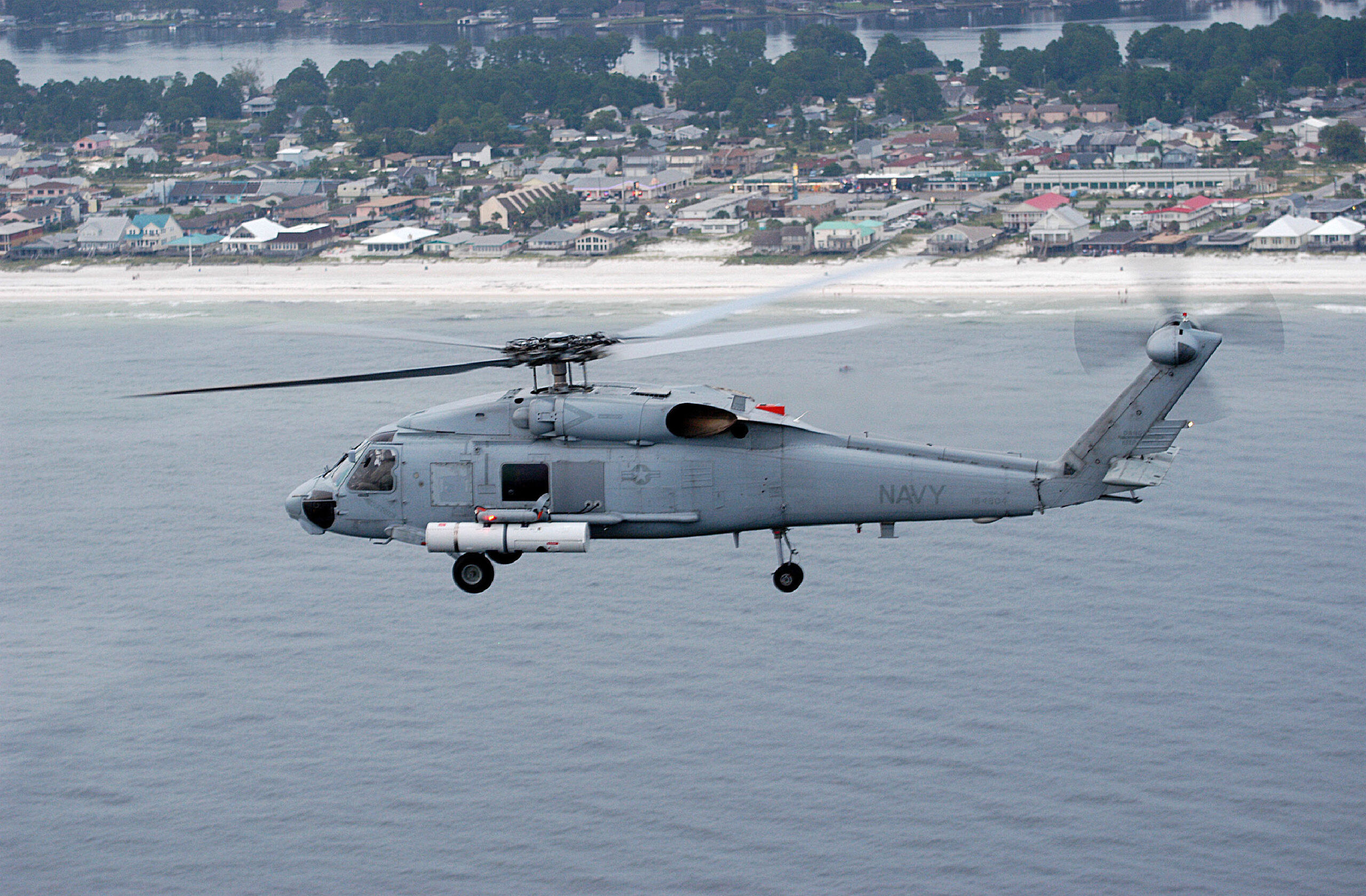
CEO has designed, qualified, and fielded DPSS laser systems for airborne LIDAR missions for over 25 years. Systems have been integrated into rotary-wing and fixed-wing platforms including the MH-60, C-130, P-3, Beech King Air, and DC-8, covering mapping, bathymetry, mine detection, and atmospheric sensing missions.

Airborne operation imposes qualification requirements absent in laboratory and ground-based deployments: sustained mechanical shock and vibration from rotors, propellers, and turbulence; thermal cycling across altitude profiles; aircraft-grade EMI compliance (RTCA/DO-160); and strict SWAP envelopes with AC or DC aircraft power.

As a vertically integrated manufacturer, CEO controls the full hardware stack (laser diode bars, arrays, gain modules, drive electronics, and complete DPSS systems), enabling direct engineering tradeoffs across every subsystem in a single design iteration cycle.

25+
Years designing & fielding airborne LIDAR laser systems
5+
Aircraft platforms with fielded CEO LIDAR lasers (MH-60, C-130, P-3, King Air, DC-8)
10
Shot lifetime on pump diodes, validated by life testing

Mission Profiles

Topographic & Vegetation Mapping

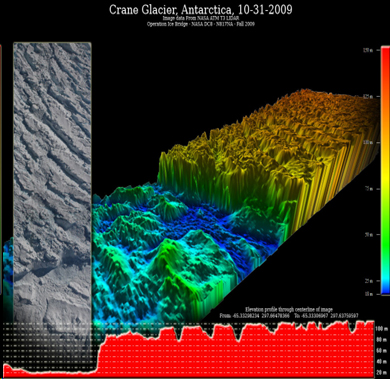
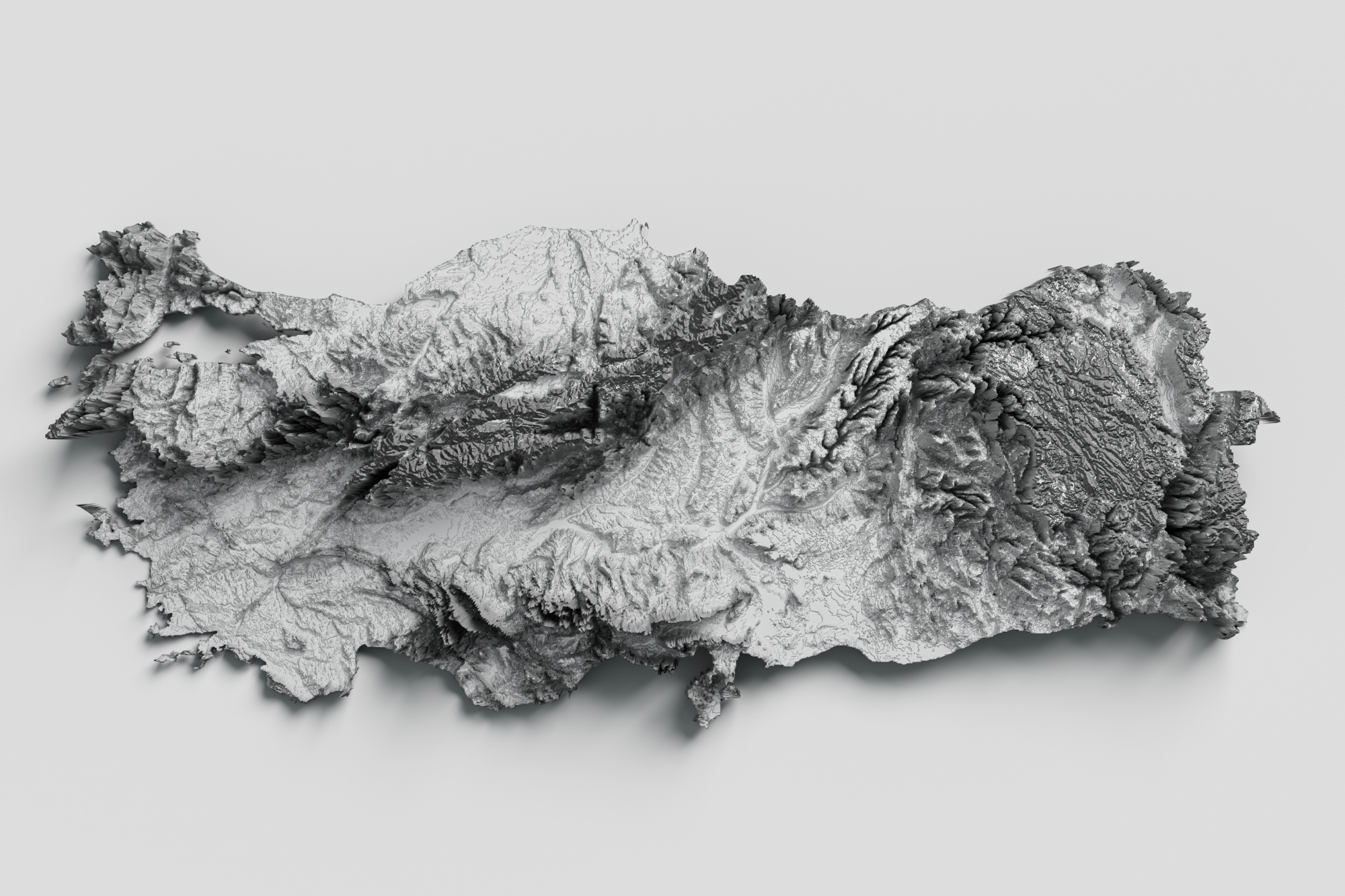
High-repetition-rate 532 nm or 1064 nm pulses for centimeter-resolution 3D terrain, forest canopy, and glacier surface models from low-altitude survey flights.

Coastal Bathymetry

Green-wavelength (532 nm) penetration of the water column enables shallow-water depth mapping and seabed characterization from airborne platforms.

Naval Mine Detection & Classification

High-energy, frequency-doubled pulses interrogate sub-surface volumes for mine identification; systems require qualification for shipboard and maritime patrol aircraft (P-3, MH-60).

Atmospheric Sensing

Aerosol backscatter, cloud profiling, and gas-species detection via differential absorption LIDAR (DIAL) demand precise wavelength control and shot-to-shot energy stability.

Engineering Constraints of the Airborne Environment

SWAP Constraints

Available volume, weight budget, and aircraft electrical supply (28 VDC or 115 VAC, 400 Hz) vary by platform. Cooling is limited to conduction or forced air; liquid cooling is generally not available. Every subsystem must be optimized for minimum SWaP without compromising reliability.

Sustained Laser Performance

Pulse energy, repetition rate, beam quality, and wavelength must remain within specification across the full environmental envelope. Degraded laser output mid-mission results in data loss that cannot be recovered. Reliability is a primary design driver.

Mechanical Shock & Vibration

Rotor and propeller beat frequencies, take-off and landing shocks, and low-altitude turbulence produce broadband vibration loads that can shift optical alignment and induce fatigue in bonded optics over mission lifetime.

Thermal Cycling

Transitions from ground-level pre-flight (up to +40 °C) to high-altitude cruise (below 0 °C) and back impose repeated CTE-driven stress on optical mounts and bonded assemblies, requiring explicit thermal mechanical analysis at the design stage.

EMI & Power Quality

Aircraft electrical buses carry conducted and radiated EMI that can corrupt laser control electronics or modulate diode drive currents. Compliance with RTCA/DO-160 is required for most platforms; power conditioning must handle bus transients.

Long Operational Lifetime

LIDAR campaigns may require 109–1010 shots over system lifetime. Pump diode degradation must be predictable and sufficiently slow that scheduled maintenance intervals are practical for the platform operator.

Design Methodology for Airborne Qualification

CEO applies airborne-grade mechanical and thermal design practices derived from 25 years of fielded systems. Key techniques applied across all airborne LIDAR programs:

FEA-Validated Optical Bench

Stiff, lightweight optical bench structures are modeled using finite element analysis to minimize deflection under RTCA/DO-160 vibration and shock loads before hardware fabrication.

Minimized Adjustable Optics

Adjustable mounts are eliminated wherever possible. Fixed-bonded optical configurations are preferred; this eliminates field re-alignment requirements and removes a primary failure mode.

Hard Plumbing (Where Applicable)

Rigid fluid connections replace flexible hoses to eliminate internal leak paths and reduce moisture ingress, both of which are sources of optic damage and laser instability in service.

High-Quality Kinematic Mounts

Kinematic optical mounts accommodate thermal expansion and contraction of the bench while decoupling the optical assembly from housing deformation under load.

Optically Bonded Assemblies

Bonding agents, mount materials, and optic substrates are selected in matched CTE sets. Bonding geometry is designed to relieve stress under thermal cycling rather than transfer it to the optic.

Vertically Integrated Supply Chain

Laser diode bars, arrays, gain modules, and drive electronics are manufactured in-house. Every critical-path component can be characterized, screened, and optimized against the airborne specification without dependence on third-party lead times.

Products for Airborne LIDAR

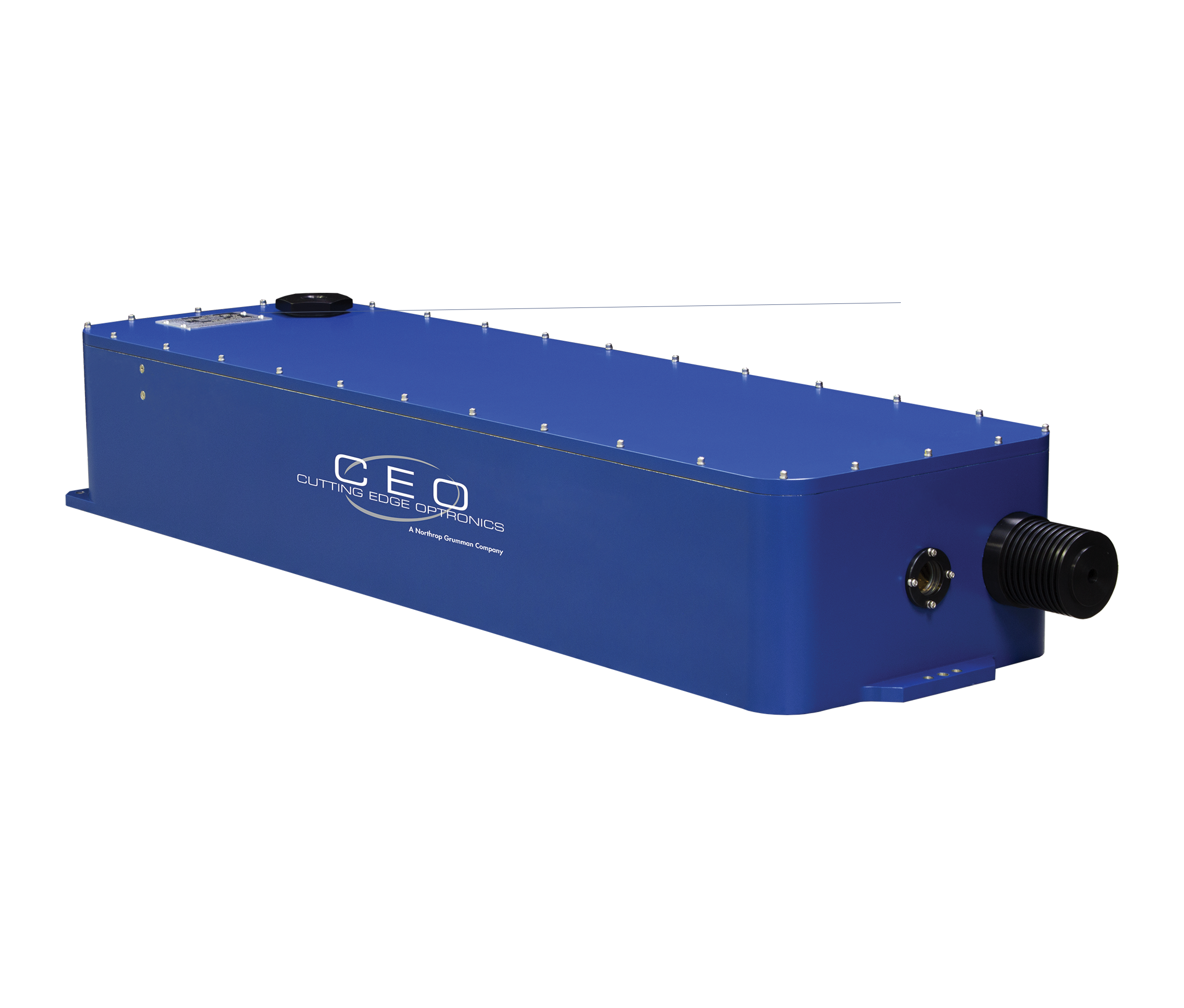
DPSS Laser / Airborne Qualified

OSL Series

  • Wavelength
    532 nm
  • Pulse Energy
    2–4 mJ
  • Repetition Rate
    1–3 kHz
  • Pulse Duration
    < 6.5 ns
  • Beam Diameter
    < 6 mm

  • < 5
  • Operating Temp.
    +5 to +40 °C
  • Storage Temp.
    −20 to +60 °C
  • Env. Qualification
    RTCA/DO-160D
  • Diode Lifetime
    10 billion shots

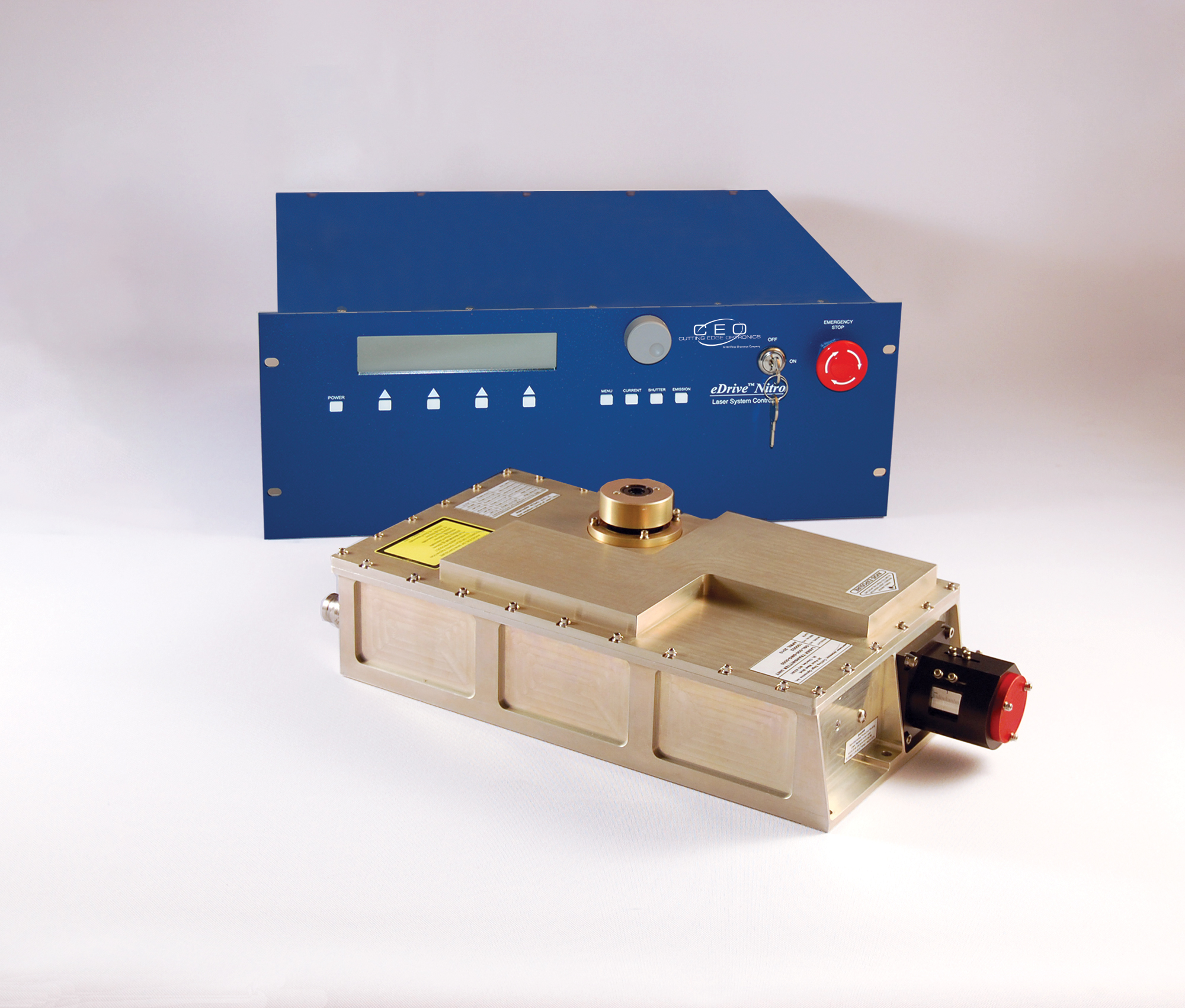
Oscillator architecture. Linear cavity, 2 mm Nd:YAG rod (RB20 gain module), EO Q-switched, KTP SHG. Designed for integration into airborne pods with aircraft power conditioning.
DPSS Laser / MOPA / Lab & Mobile

Gigashot™ L (GSL-012-QTU)

  • Energy @ 1064 nm250 mJ
  • Energy @ 532 nm180 mJ
  • Energy @ 355 nm125 mJ
  • Repetition Rate100 Hz
  • ArchitectureMOPA
  • Warranty2-yr / 10,000 hr (pump diodes)

MOPA architecture derived from CEO airborne laser designs. Opto-mechanical practices eliminate need for user realignment. Suited for mobile and ground-based LIDAR campaigns where higher pulse energy is required.
DPSS Laser / Airborne Qualified

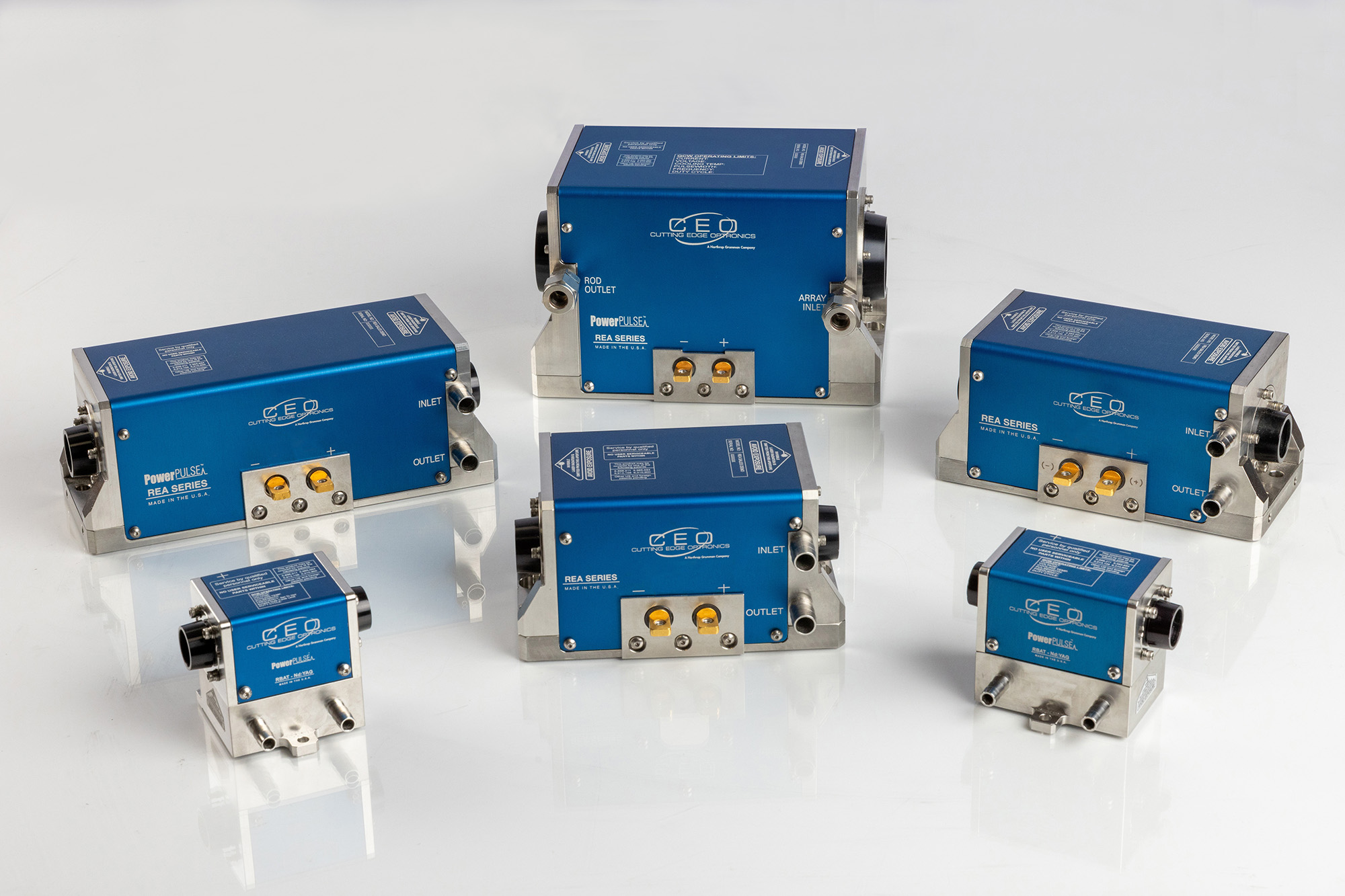
OSL Series

  • Gain MediumNd:YAG (2 mm rod)
  • ConfigurationCW / QCW resonator or amplifier
  • Typical UseQ-switched oscillator for LIDAR
  • Design FlexibilityRod length, diameter, media configurable

OEM gain module for system integrators building custom LIDAR laser heads. Available with Nd:YAG, Nd:YLF, and other gain media. Sold externally as a subsystem component for MOPA and oscillator designs.

Technical Resources

Frequently Asked Questions

What wavelength is typically used for airborne LIDAR, and which CEO products cover each band? arrow faq
532 nm (frequency-doubled Nd:YAG) is standard for topographic mapping and bathymetry due to water penetration depth and detector sensitivity. 1064 nm is used where green-wavelength eye safety margins are insufficient or where higher pulse energy is required. 355 nm (tripled) is used for specific atmospheric sensing applications. CEO's OSL series operates at 532 nm; the Gigashot-L is available at 1064 nm, 532 nm, and 355 nm.
What environmental qualification standards apply to CEO airborne LIDAR lasers? arrow faq
CEO airborne laser systems are designed and tested to RTCA/DO-160D, the standard qualification framework for commercial and military airborne equipment. This encompasses vibration, mechanical shock, temperature and altitude, humidity, EMI/EMC, and power input testing. Specific test levels are agreed with the customer based on the target platform and mission profile.
Can CEO lasers be integrated into aircraft platforms with 28 VDC power only? arrow faq
Yes. CEO designs power conditioning electronics in-house for both 28 VDC (MIL-STD-704 / RTCA/DO-160 compliant) and 115 VAC 400 Hz aircraft bus inputs. Input power architecture is defined early in the program and integrated into the laser drive electronics rather than handled by an external power supply box.
What is the expected pump diode lifetime for an airborne LIDAR mission? arrow faq
CEO's airborne LIDAR laser diodes are validated to 10 billion (1010) shots before significant output degradation. At 3 kHz repetition rate, this corresponds to over 900 hours of continuous operation. The Gigashot-L carries a 2-year / 10,000 operating hour warranty on pump diodes.
Can CEO design a laser to a custom SWAP envelope for a specific platform? arrow faq
Yes. CEO's vertically integrated manufacturing capability means that laser diode arrays, gain modules, drive electronics, and the optical bench are all designed in-house. Custom enclosure geometry, connector placement, and thermal interface specifications are accommodated. Contact the sales engineering team with platform drawings and performance requirements to initiate a tradeoff study.
Does CEO supply gain modules or laser diode arrays separately for integrators building their own LIDAR laser heads? arrow faq
Yes. CEO sells laser gain modules (including the RB20 used in the OSL) and laser diode arrays as external products. Integrators developing proprietary LIDAR laser architectures can procure these components directly and benefit from the same diode and module quality used in CEO's fielded airborne systems.

Specify a Laser for Your Airborne LIDAR Program

Contact CEO's sales engineering team with your platform, power budget, pulse energy, rep rate, and environmental requirements. Custom designs and OEM component supply available.